
Weatherford Clay Soil and Concrete Cracks: What Parker County Homeowners Need to Know
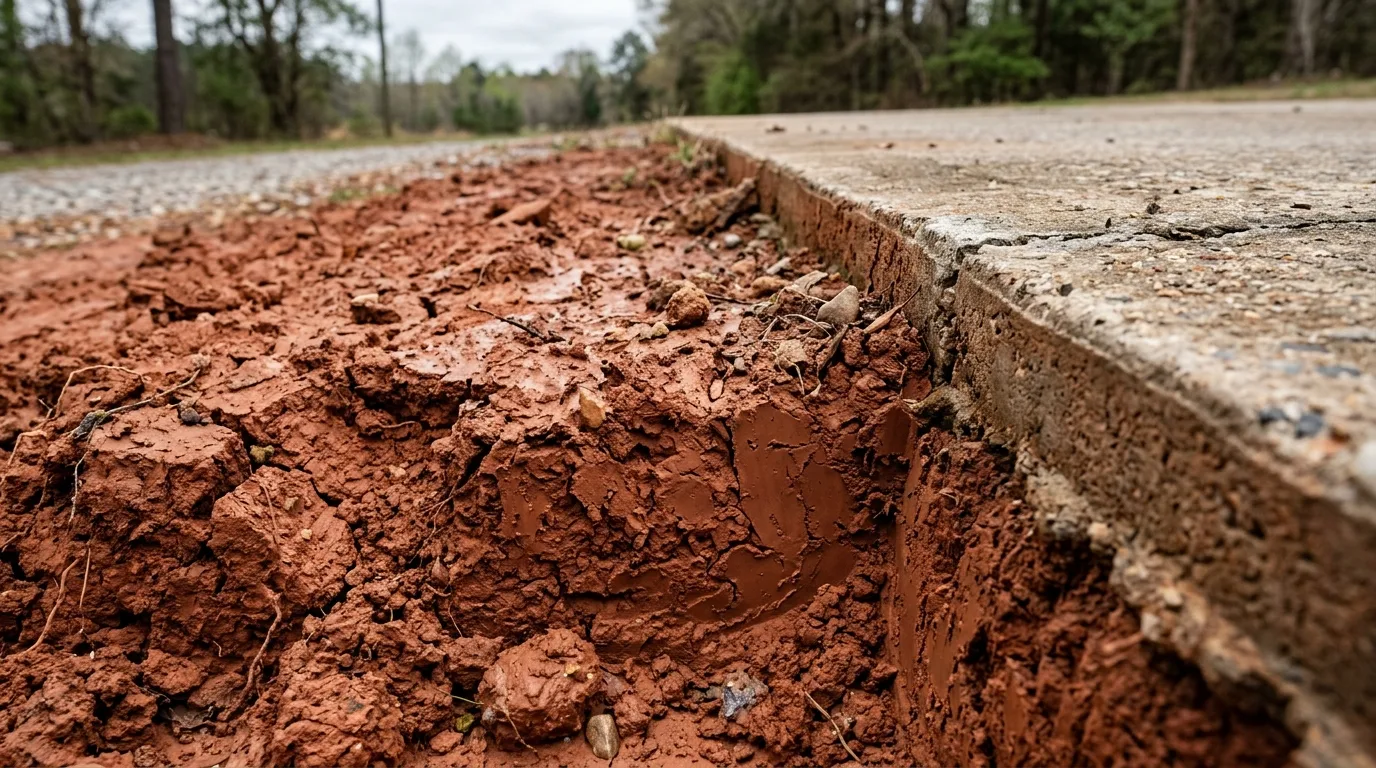
If you’ve watched a crack in your driveway or patio go from a hairline to a quarter-inch wide over two or three summers in Weatherford, the culprit almost certainly isn’t the concrete — it’s the soil beneath it. In this post, we cover how Parker County’s expansive clay soil drives concrete cracking, what that means for homeowners, and what proper concrete installation in this area actually looks like.
Concrete Cracking on Your Weatherford Property?
We assess the underlying soil cause before recommending repairs. Free evaluation — call (888) 376-0955.
Why Clay Soil and Concrete Cracks Matter for Weatherford Homeowners
Parker County’s soil is classified under the Weatherford series — a fine-loamy soil with a Bt horizon of sandy clay loam containing 18–35% clay content. That clay percentage is high enough to cause measurable volume changes with moisture fluctuation. When clay absorbs water, it expands. When it dries, it contracts. In a climate like Weatherford’s, where the soil undergoes a 10–11 inch annual moisture deficit during the summer dry season, that contraction is substantial — and every concrete slab sitting on that soil experiences it as the ground beneath it shifts.
The Weatherford soil also sits atop noncemented sandstone bedrock at 40–60 inches. This shallow bedrock limits deep footing options and means that drainage design matters enormously — water that can’t drain through bedrock concentrates laterally under slabs, accelerating the swelling side of the clay cycle.
For homeowners in the Historic Downtown neighborhoods and South Side Subdivisions, this dynamic plays out in visible concrete damage every few years. Understanding why it happens is the first step toward preventing it in new work or managing it in existing concrete.
Types of Clay-Driven Concrete Damage in Parker County
Shrinkage cracking from summer drought: During Weatherford’s dry summer months (July averages just 1.86 inches of rainfall), clay soil beneath concrete slabs contracts, creating voids where the soil has pulled away from the concrete underside. Without the soil support, concrete flexes under vehicle loads and breaks — most often through existing weak points like control joints that weren’t deep enough, or at random locations where the slab was thinnest.
Heaving from seasonal swelling: During spring wet season (May averages 4.42 inches of rainfall), saturated clay swells and can push sections of concrete upward, creating uneven surfaces, trip hazards along sidewalk panels, and driveway sections that suddenly drain toward the foundation instead of away from it.
Edge separation and crumbling: As clay contracts at the driveway perimeter, the edges lose sub-base support and begin to crumble or break away, especially on older driveways installed without perimeter edge reinforcement.
Practical Ways Clay Soil Affects Concrete Projects
Driveways without base preparation: A concrete driveway poured directly on compacted native clay without a crushed limestone base is relying on the clay itself for support. When that clay contracts 10–11 inches worth of moisture each summer, the driveway flexes and cracks. Most driveway replacements in Parker County are for slabs that skipped proper base prep — a concrete driveway installation that includes a compacted gravel base changes this outcome fundamentally.
Foundation slab differential settlement: When clay soil moisture varies across a foundation footprint — wetter on one side due to drainage patterns, drier on another — the slab settles unevenly. This differential movement is why so many Weatherford homes develop sticking doors, wall cracks above door frames, and visible slab tilt. Proper drainage design and vapor barriers under slab foundations mitigate this.
Retaining wall failure from hydrostatic pressure: During wet spring months, clay soil behind a retaining wall holds significant water, creating lateral pressure against the wall face. Walls without drainage (perforated pipe, gravel backfill) accumulate this pressure until they tilt, crack, or fail. Proper retaining wall construction in Parker County always includes drainage infrastructure behind the wall.
Patio edge cracking near home foundation: When a patio slab drains toward the house, water concentrates in the clay against the foundation — increasing swelling pressure on that side. When the same area dries out in summer, it pulls away, creating a gap between the patio and foundation. Slope design that directs patio drainage away from the home is the solution, not just a concrete repair.
How Concrete Driveway Installation in Weatherford Should Address Clay Soil
The standard approach to concrete on Parker County clay — used by contractors who know the local conditions — involves three layers of defense. First, excavation removes the top layer of native soil and replaces it with 4–6 inches of compacted crushed limestone base. The limestone drains water efficiently, breaking the capillary connection between clay and slab, and provides a stable, consistent support platform that doesn’t change volume with moisture.
Second, rebar reinforcement (typically #3 or #4 bar on a 24-inch grid) ties the slab together so that differential settlement from clay movement doesn’t open into visible cracks — the rebar holds the slab as a unit. Third, control joints are placed every 8–10 feet to direct any future cracking to predetermined locations, preventing random cracking patterns.
Concrete Repair Assessment in Weatherford
We identify the soil cause before recommending a fix. Honest assessments, free of charge — (888) 376-0955.
What Affects the Cost of Addressing Clay Soil in Concrete Work
The additional cost of proper clay soil mitigation — compacted base material, rebar, and drainage design — typically adds $1–$3 per square foot to a concrete project compared to a minimal bid that skips these steps. For a 400 square foot driveway, that’s $400–$1,200 upfront. The cost of replacing a driveway that failed in 8 years because of inadequate base prep runs $3,000–$6,000 — plus the frustration of redoing a project that should have lasted 30+ years.
For concrete projects near the Lake Weatherford shoreline or on the sloped lots in the Brock-area equestrian estates, drainage design is especially important because water movement across large properties concentrates beneath any concrete surface that lacks adequate slope or perimeter drainage. We price every project to include what the soil conditions actually require.
Frequently Asked Questions
What causes concrete to crack in Weatherford clay soil?
Parker County’s Weatherford soil series contains sandy clay loam with 18–35% clay content that swells when wet and contracts when dry. Weatherford’s summer water deficit of 10–11 inches causes the soil beneath concrete slabs to shrink significantly each year, creating voids that allow slabs to flex and crack under load. Concrete poured without a compacted gravel base, adequate rebar reinforcement, and control joints is most vulnerable. Learn more about concrete driveway installation designed for these conditions.
Can I repair clay-cracked concrete or do I need to replace it?
It depends on the severity and type of cracking. Surface cracks at control joints that are less than 1/4 inch wide can often be filled and the root drainage cause corrected. Full-depth cracks, sections that have settled more than an inch, or widespread cracking across the slab usually indicate that the underlying cause (soil movement, inadequate base) requires addressing with concrete repair that includes drainage correction or full replacement. We give honest repair vs. replacement assessments.
How much does it cost to fix clay-driven concrete damage in Weatherford?
Surface crack repairs run $150–$400 per driveway or patio project. Concrete resurfacing to restore a damaged slab surface runs $3–$8 per square foot. Full replacement with proper base prep and drainage costs $5–$10 per square foot for a broom-finished pour. The right choice depends on the extent and depth of damage — we assess this for free before recommending an approach.
Stop the Cycle of Concrete Cracking in Weatherford
We build concrete that works with Parker County's clay soil, not against it. Free estimates — (888) 376-0955.
Related: