
Weatherford Concrete Pouring: Best and Worst Times of Year
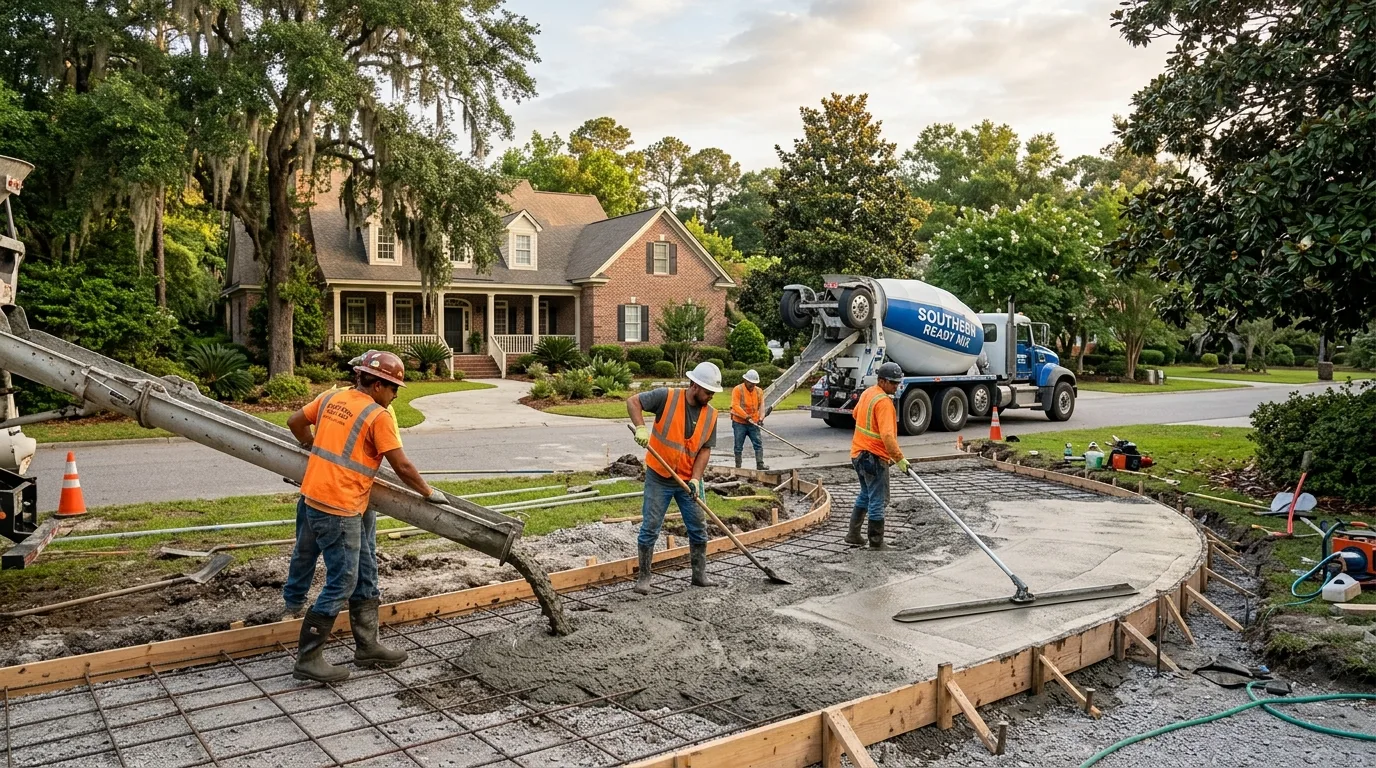
Here’s a fact most Weatherford homeowners don’t know until they’ve scheduled a concrete project in July: the season you choose for your pour matters almost as much as who pours it. In North Texas, extreme temperatures at both ends of the calendar create concrete curing challenges that don’t exist in more temperate climates. In this post, we walk through every season in Weatherford and explain exactly what happens to concrete in each one — and when your project is most likely to succeed.
Schedule Your Weatherford Concrete Project
We'll advise on the right timing for your specific project and Parker County conditions. Call (888) 376-0955.
Why Concrete Timing Matters for Weatherford Homeowners
Concrete Weatherford projects succeed or fail based in significant part on curing conditions. Concrete is not a material that dries — it cures through a chemical hydration reaction between cement and water. That reaction requires moisture and proceeds best in a temperature range of approximately 50°F–75°F. When temperatures fall outside that range — either too hot or too cold — the hydration reaction is disrupted, and the concrete that results is weaker, more porous, and more prone to surface cracking than concrete cured in ideal conditions.
Weatherford’s climate creates both extremes. August averages 94.7°F and January averages a low of 31.8°F — a range that covers the worst-case scenarios for concrete curing on both ends. Understanding how each season affects your project helps you schedule smartly and set realistic expectations when ideal windows aren’t available.
Types of Concrete Projects and Their Seasonal Sensitivity
Concrete driveways: Moderately sensitive to temperature. The large surface area of a driveway is exposed to evaporation from above and solar heat gain from below. Summer pours on driveways require early morning scheduling and evaporation retarders. See our concrete driveway installation page for more.
Concrete patios: Similar to driveways in seasonal sensitivity. Stamped concrete patios are more sensitive than plain patios because the stamping window is compressed in summer heat — the concrete sets faster, reducing the time available for pattern work.
Retaining walls: Less sensitive to surface evaporation because wall sections are thicker and cure more slowly. Winter work below 40°F is still risky for footings that cure in exposed conditions.
Concrete foundations: The most critical pour for temperature management — large slabs with significant mass, multiple layers, and long cure requirements. Spring and fall are strongly preferred for foundation pours in Weatherford.
Practical Seasonal Guide for Weatherford Concrete Projects
Spring (March–May) — IDEAL: Spring is the best season for concrete work in Weatherford. Temperatures in the 50°F–75°F range allow the hydration reaction to proceed at the right pace. Parker County receives its heaviest spring rainfall in May (4.42 inches average), so monitor weather 48 hours before and after your pour date — rain on fresh concrete during the first 24 hours can damage the surface finish. Spring is when most Weatherford contractors have the most scheduling availability, making it easier to find quality crews without long waits.
Summer (June–August) — CHALLENGING: Weatherford’s summer temperatures regularly exceed 95°F, creating rapid surface evaporation that can strip moisture from fresh concrete faster than the hydration reaction needs it. The result is plastic shrinkage cracking — tiny cracks that appear within the first 24 hours and indicate that the surface cured before the bulk concrete beneath it. Mitigation strategies include scheduling pours before 8 a.m. (when temperatures are lowest), applying evaporation retarder spray immediately after finishing, and using water or burlap curing to keep the surface moist for the first 3–7 days.
Fall (September–November) — IDEAL: Fall rivals spring as the best concrete season in Weatherford. September and October typically offer stable temperatures, lower humidity than spring, and fewer heavy rain events that interrupt pours. October is wetter than July (3.76 inches average), but fall rainfall is generally more predictable and occurs in shorter events. Many experienced Weatherford contractors consider fall their preferred window for stamped concrete and foundation work.
Winter (December–February) — RISKY: January averages a low of 31.8°F in Weatherford — cold enough to affect freshly poured concrete within the first 24–48 hours when it’s most vulnerable. Concrete exposed to freezing during the first 48 hours can suffer permanent strength loss as forming ice crystals disrupt the hydration process. Winter work is possible with precautions: heated blankets over the pour during cold nights, accelerating admixtures that speed the hydration reaction, and avoiding pours when freezing temperatures are forecast within 48 hours of the scheduled date.
Weatherford Concrete — Scheduling for Success
We manage curing conditions for every season. Free estimates — (888) 376-0955.
What Affects Concrete Timing Decisions in Parker County
Parker County’s soil moisture cycle: The clay soil beneath your concrete project is at its most stable moisture level in fall — after summer drought has completed and before the wet spring season begins. This stable soil condition is one reason fall is preferred for foundation pours in Weatherford: the sub-base is least likely to shift during the critical early curing period.
City of Weatherford permit timing: Drive approach permits and building permits for concrete work take a few business days to process through the City of Weatherford Development Services. If your project requires a permit, factor this into your scheduling — apply 1–2 weeks before your target pour date to avoid delays.
Contractor availability: Spring and fall windows fill quickly with experienced concrete contractors in Weatherford. The best crews book 3–6 weeks out during peak seasons. If you want a quality contractor in the ideal window, contact them in late winter (for spring projects) or in August (for fall projects).
Concrete pump availability: Large pours requiring a concrete pump may need additional lead time for equipment scheduling, especially during high-demand spring and fall seasons in Parker County.
Frequently Asked Questions
What is the best time of year to pour concrete in Weatherford, TX?
Spring (March–May) and fall (September–November) are the best seasons for concrete work in Weatherford. Temperatures in the 50°F–75°F range allow concrete to cure properly without the rapid evaporation that occurs in summer above 95°F or the freeze risk that occurs in winter below 40°F. Fall is preferred for foundation pours and stamped concrete; spring is ideal for driveway and patio installations when contractor availability is slightly better.
Can concrete be poured in summer in Weatherford?
Yes — summer concrete pours in Weatherford are done routinely with the right precautions. Early morning scheduling (before 8 a.m.), evaporation retarder spray, and active curing (wet burlap or curing blankets) during the first 3–7 days are standard practices for summer work in North Texas. The risk is not that summer pours can’t succeed — it’s that they require more management and an experienced crew to execute correctly. See our concrete driveways page for more on our summer protocols.
What happens if concrete freezes in Weatherford?
Concrete exposed to temperatures below 32°F within the first 24–48 hours of pouring can suffer permanent damage. Forming ice crystals disrupt the cement hydration reaction and create internal micro-cracks throughout the slab. The result is concrete with reduced strength and increased porosity — it looks normal but is significantly weaker than correctly cured concrete. Protective measures (heated blankets, accelerating admixtures) prevent this; they are required, not optional, for any winter pours in Parker County.
Ready to Schedule Your Weatherford Concrete Project?
We'll help you pick the right timing and manage curing for any season. Free estimate — (888) 376-0955.
Related: